An ensemble novel hands the story to several characters who take turns speaking, so the reader only gets the full version of events after hearing everyone. The form is demanding, because you have to sustain several voices over hundreds of pages, but it lets you show a single event through people who didn't live it the same way, which a single narrator does poorly.
What an ensemble novel is
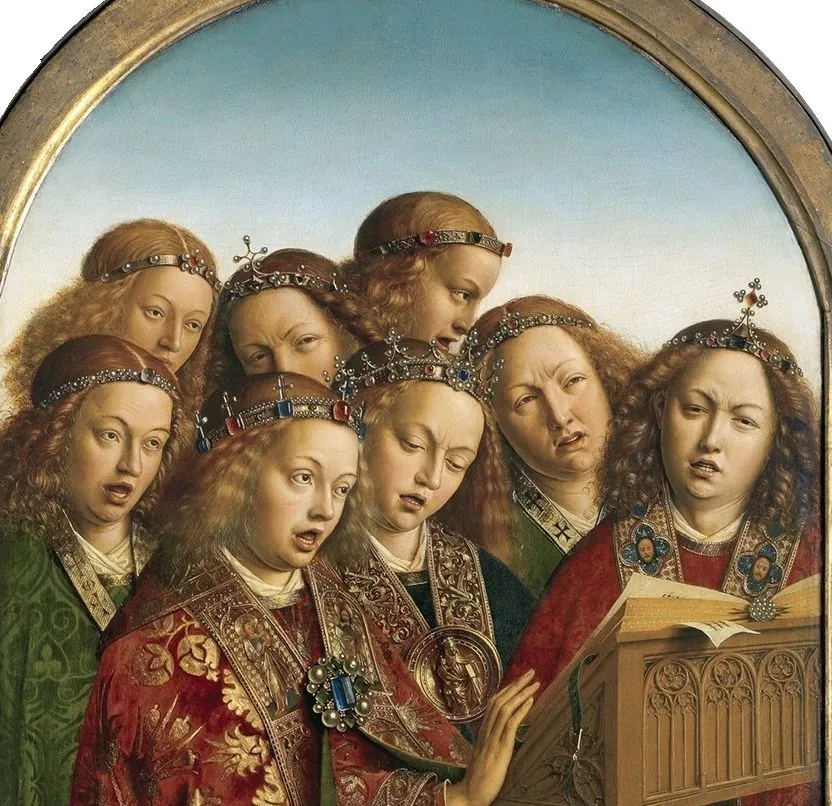
We speak of an ensemble novel, or a polyphonic novel, when the story passes from one narrator to another across chapters. French critics call it a roman choral, a word borrowed from music: in a choir, each section sings its own part, and the whole piece comes from all of them together.
The criterion is the change of narrator, whatever the number of characters. An omniscient narrator can follow twenty of them without the book becoming an ensemble novel, since that narrator is still the one telling the story. In an ensemble novel, each chapter (or each section) is told from a different character, often in the first person, sometimes in close third person, and that character only knows what they saw or chose to believe.
The reader therefore pieces the facts together from partial testimonies, and the novel often finds its interest in the gap between what each one tells.
Five ensemble novels, and what each does with the form
As I Lay Dying, William Faulkner (1930)
Fifteen narrators take turns across the book's fifty-nine chapters, which follow the Bundren family as they carry Addie's coffin to Jefferson, where she asked to be buried. Each chapter bears the name of the person speaking, and each one speaks in their own way: Cash, the carpenter son, explains in a numbered list why he made the coffin on the bevel, while Vardaman, the youngest, gets a chapter of a single sentence, "My mother is a fish." Several narrators speak only once, Addie herself among them.
The Poisonwood Bible, Barbara Kingsolver (1998)
A family of American missionaries settles in the Congo in 1959. The story is shared between the mother, Orleanna, and her four daughters, each with her own age and her own way of judging what happens to them. The father, Nathan Price, who decides everything in the family, never gets to speak: the reader knows him only through the five women who endure him, and that silence says a great deal about him.
In the Crowd, Laurent Mauvignier (2006)
Mauvignier gives voice to Belgians, English and Italians who came to Heysel Stadium in Brussels on 29 May 1985 for the European Cup final, where thirty-nine people died in one of the stands. Each arrives at the stadium with their own story, and the reader goes through the day several times, up to the disaster and into the years that follow.
Gone Girl, Gillian Flynn (2012)
Two narrators alternate: Nick Dunne, who tells in the present tense the days following his wife's disappearance, and Amy, whose diary we read, tracing the course of their marriage. Readers instinctively trust a diary, and Flynn uses that to deceive them until the twist in the middle of the book.
A Song of Ice and Fire, George R. R. Martin (since 1996)
Each chapter bears the name of the character it follows and stays in close third person. Some thirty characters get their own chapters over the course of the saga. Martin holds himself to a strict rule: what none of them sees isn't told, so important events happen off-stage and the reader learns about them, like the characters, through secondhand accounts.
What the form gives, and what it costs
The first advantage is dramatic irony. If Mark's chapter reveals that someone is waiting for him at the station with a gun, the next chapter, where Clara suggests he take the train, reads completely differently, because the reader knows what she doesn't. The form also serves moral complexity: when the antagonist has their own chapters, the reader hears their reasons, and it becomes hard to reduce them to a villain.
Each new voice asks the reader to remember a name and a way of speaking, and the more narrators there are, the fewer pages each has to come alive. The most frequent flaw remains unevenness between voices, since a reader who prefers Clara reads Mark's chapters waiting for her to come back. Finally, each change of narrator interrupts a scene, and if Clara's chapter stops just as everything tips over, the reader resents being sent somewhere else.
Key point. An ensemble novel lives on the gap between accounts: if two narrators tell the same thing in the same way, one of them is superfluous.
Six tips for writing an ensemble novel
1. Choose few narrators
Two, three or four voices are enough for most stories, and each then has enough room for the reader to grow attached. Faulkner has fifteen, but his novel is short and several of those voices speak only once. For a first ensemble novel, starting with three narrators leaves room to add one if the story calls for it.
2. Make each voice recognizable
The reader should know who is speaking before reading the name at the top of the chapter. Several levers help, and they combine:
- vocabulary, because a high-school girl and a notary don't name things the same way;
- sentence length, which can be clipped for one and expansive for another;
- what each one notices on entering the same room, one the exit, the other the price of the furniture;
- the tense of the narration, with one narrator in the present and another in the past, as in Flynn.
The test: remove the names from a few chapters, have someone read them and ask who is speaking.
3. Give each narrator their own story
A character who merely comments on the main plot doesn't need chapters of their own. Each narrator must want something and change along the way, or their chapters become the ones the reader skims.
4. Make the plots cross
The pleasure of an ensemble novel comes from the threads touching. A car parked outside Clara's house, an unimportant detail in her chapter, can become the turning point of Mark's plot two chapters later. The reader makes the connection themselves, and that work is what keeps them reading.
5. Handle the handover between voices
Each change of narrator costs the reader a little attention. You reduce that cost by ending a chapter on a question the next one doesn't resolve right away, by opening the next chapter on an action rather than a setup, and by keeping a regular order of alternation (A, B, A, B, or A, B, C) as long as the story has no reason to break it.
6. Keep a record of who speaks, and when
Beyond three plotlines, you can no longer keep in your head which character had the floor in the last five chapters, or how long a narrator has been silent. A table is enough: one row per chapter, with the narrator, the date in the story and what the reader learns there.
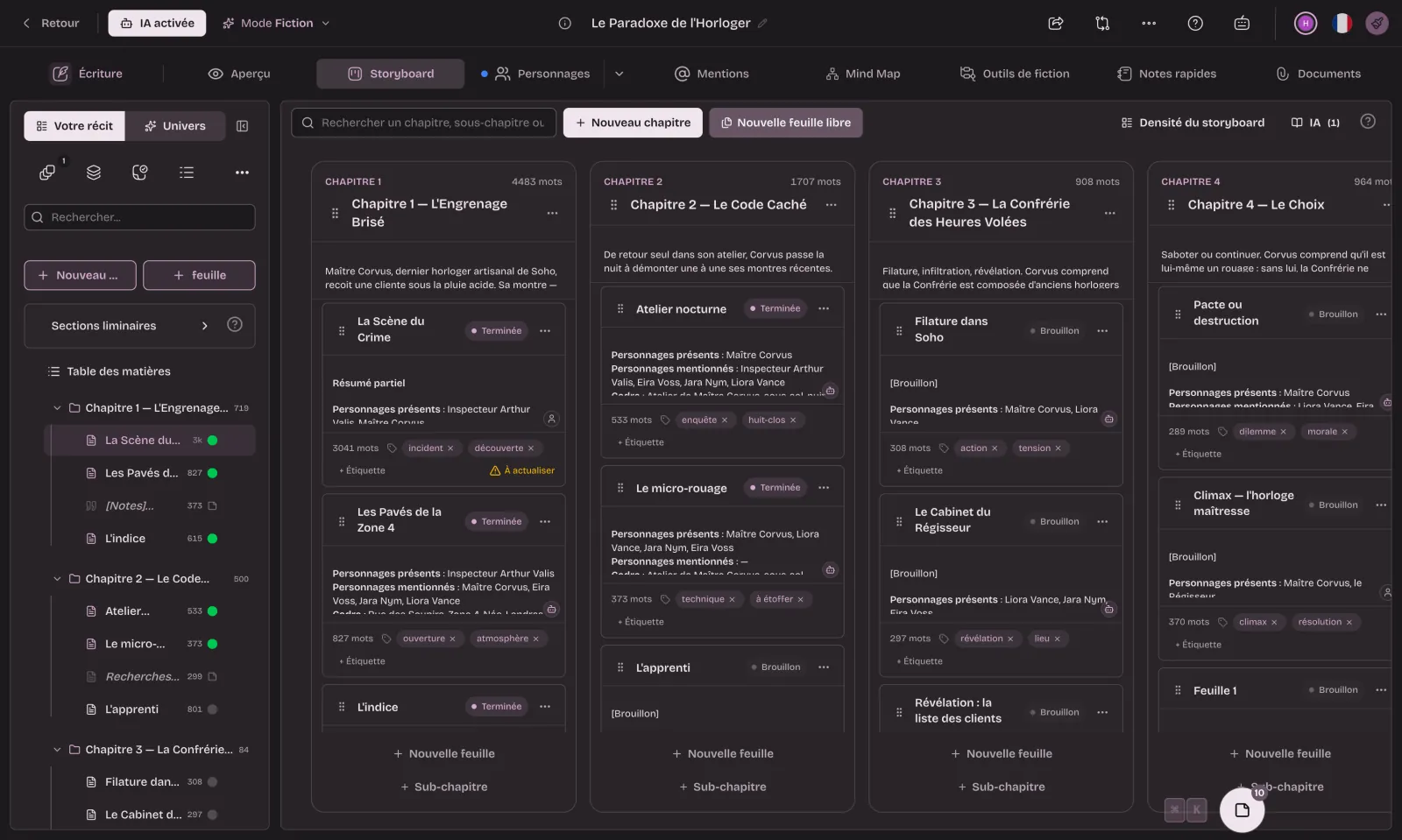
In Extypis, the scene board shows your chapters and scenes with their summaries, and you can give each scene a label with its narrator's name, then move the cards around to try a different order of alternation.
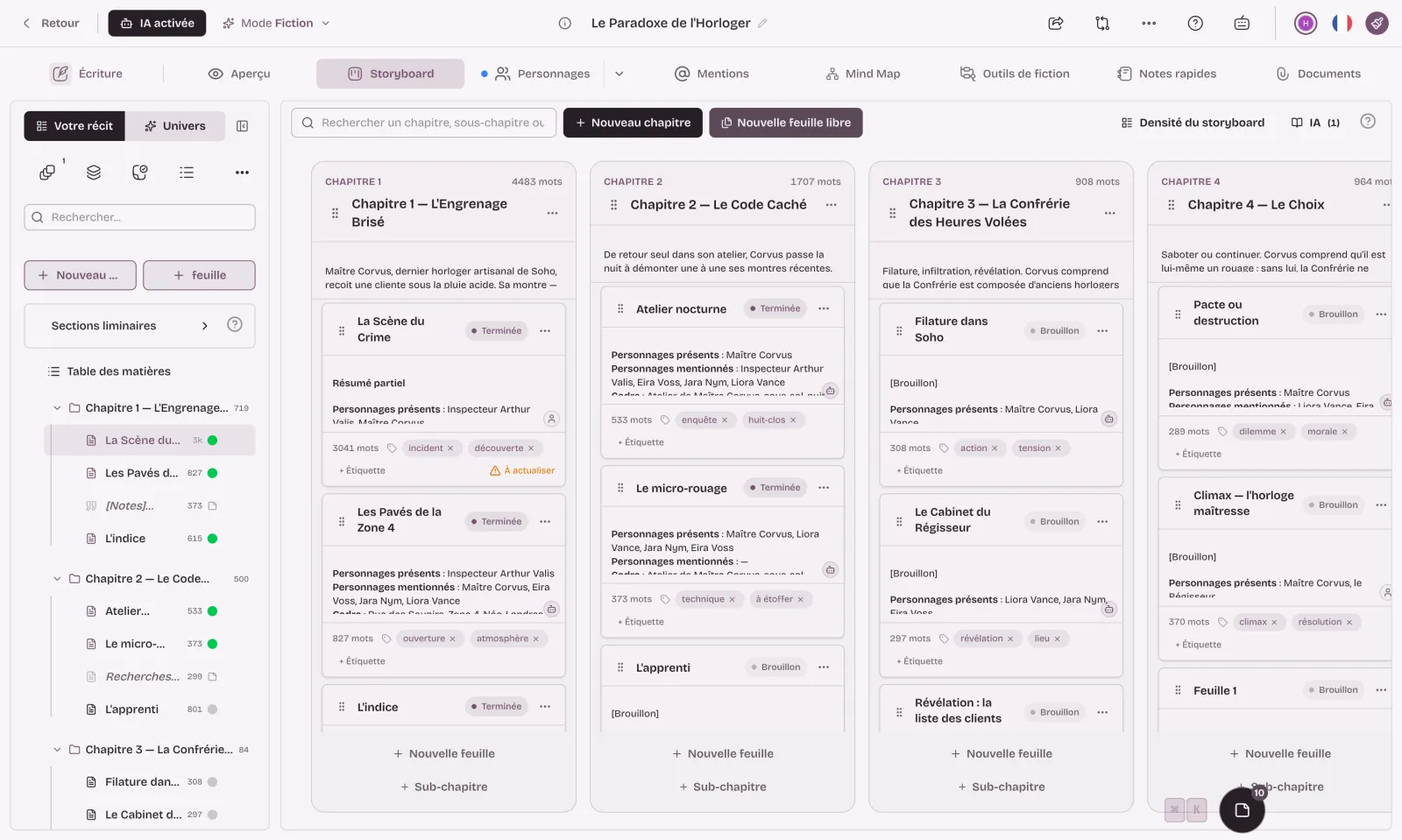
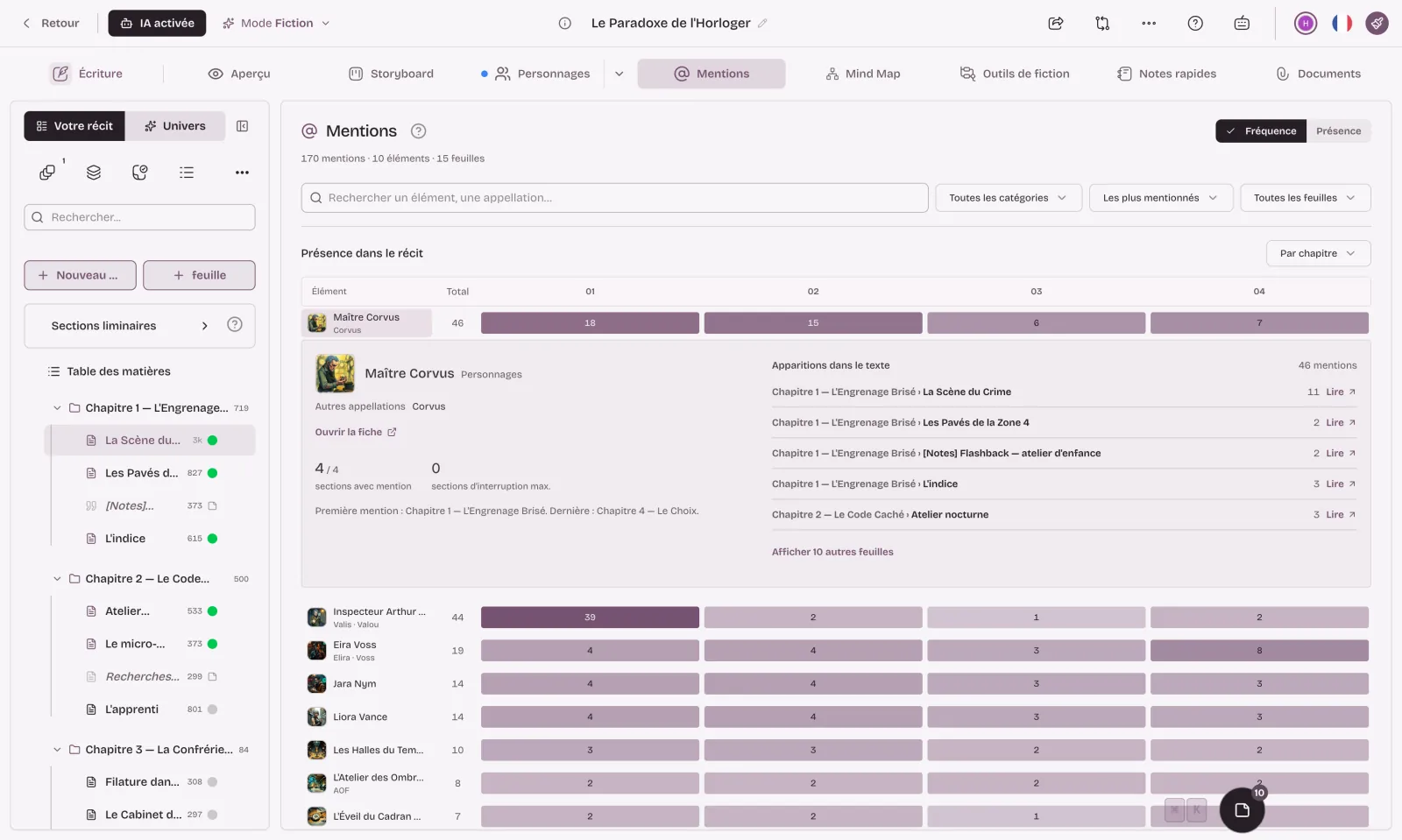
The editor also spots your characters' names in the text, nicknames included if they appear in their sheet, and the mentions page shows each one's presence chapter by chapter. It only counts written names, so it doesn't see the "I" of a first-person narrator, but you can spot at once a character nobody has mentioned for six chapters.

Ensemble novel or omniscient narrator?
An omniscient narrator can also get inside the heads of several characters. The difference lies in who tells the story: the omniscient narrator keeps a single voice from beginning to end, can comment on the action and tell the reader what no character knows, as Balzac does when he pauses to explain a fortune or a Paris street. The ensemble novel gives up that voice placed above the others, and each of its chapters stays shut inside one point of view, with its mistakes and what it prefers to keep quiet.
The question to ask, then, is whether your story rests mainly on what happened or on how each person lived it. In the second case, the ensemble novel suits it. To choose next between "I" and "he" or "she" for your narrators, our guide to first or third person details what each allows.
Hubert Giorgi
Author
The writing studio novelists were missing
Outline, characters, places and objects, the links between them, mind map, scene board, export: everything lives in one place. Plus an AI that knows your story, whenever you want one.
Free to write and to export. No credit card asked.