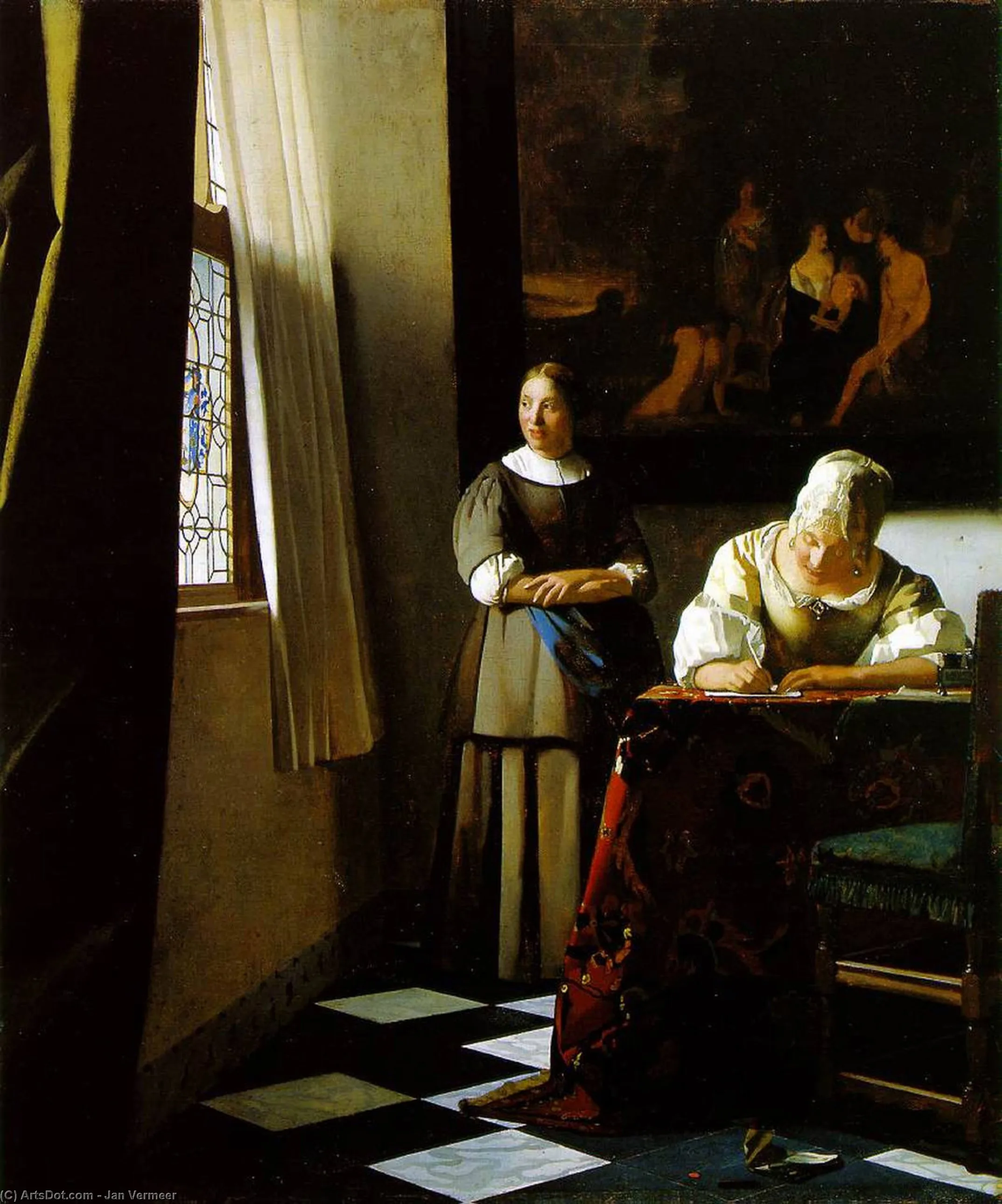
When starting a novel, many writers hesitate between "I" and "he" or "she." The question looks grammatical, when in fact it decides what the reader will know, and whose sensibility they'll live the story through.
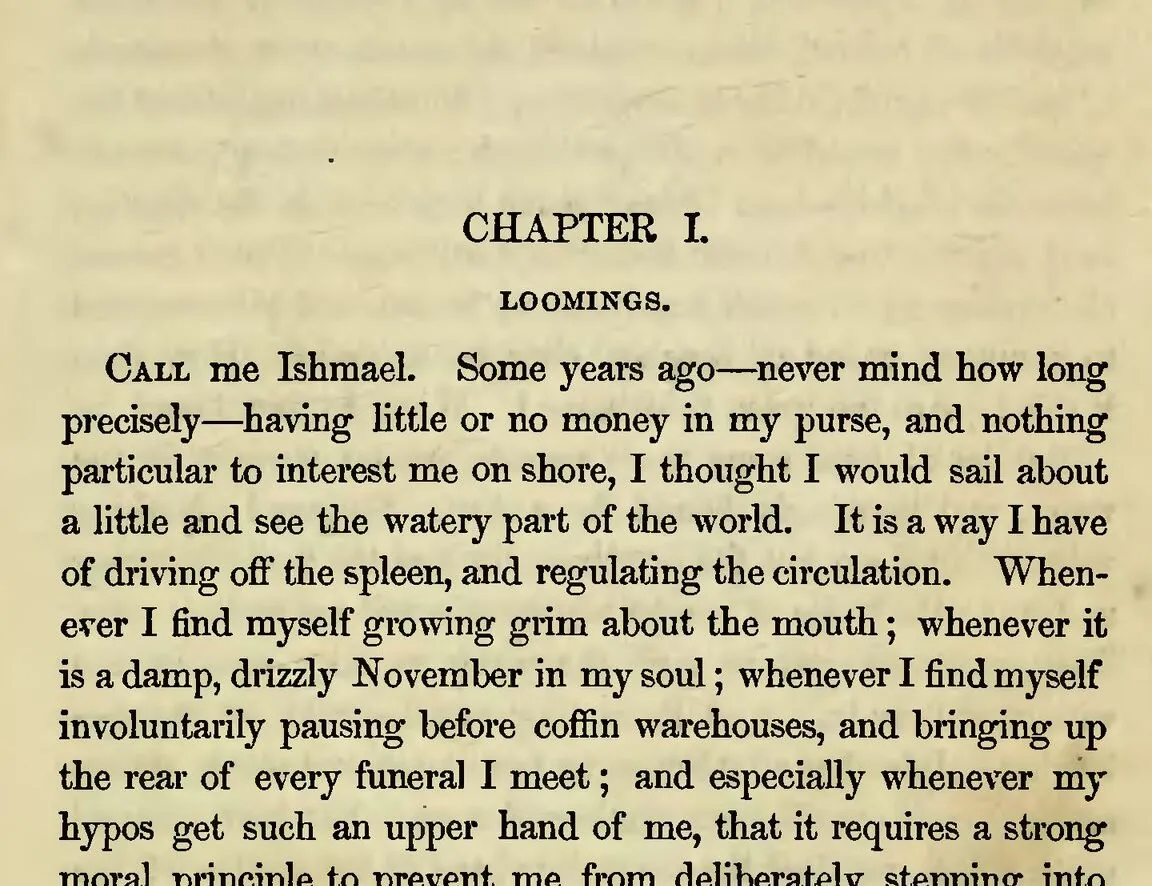
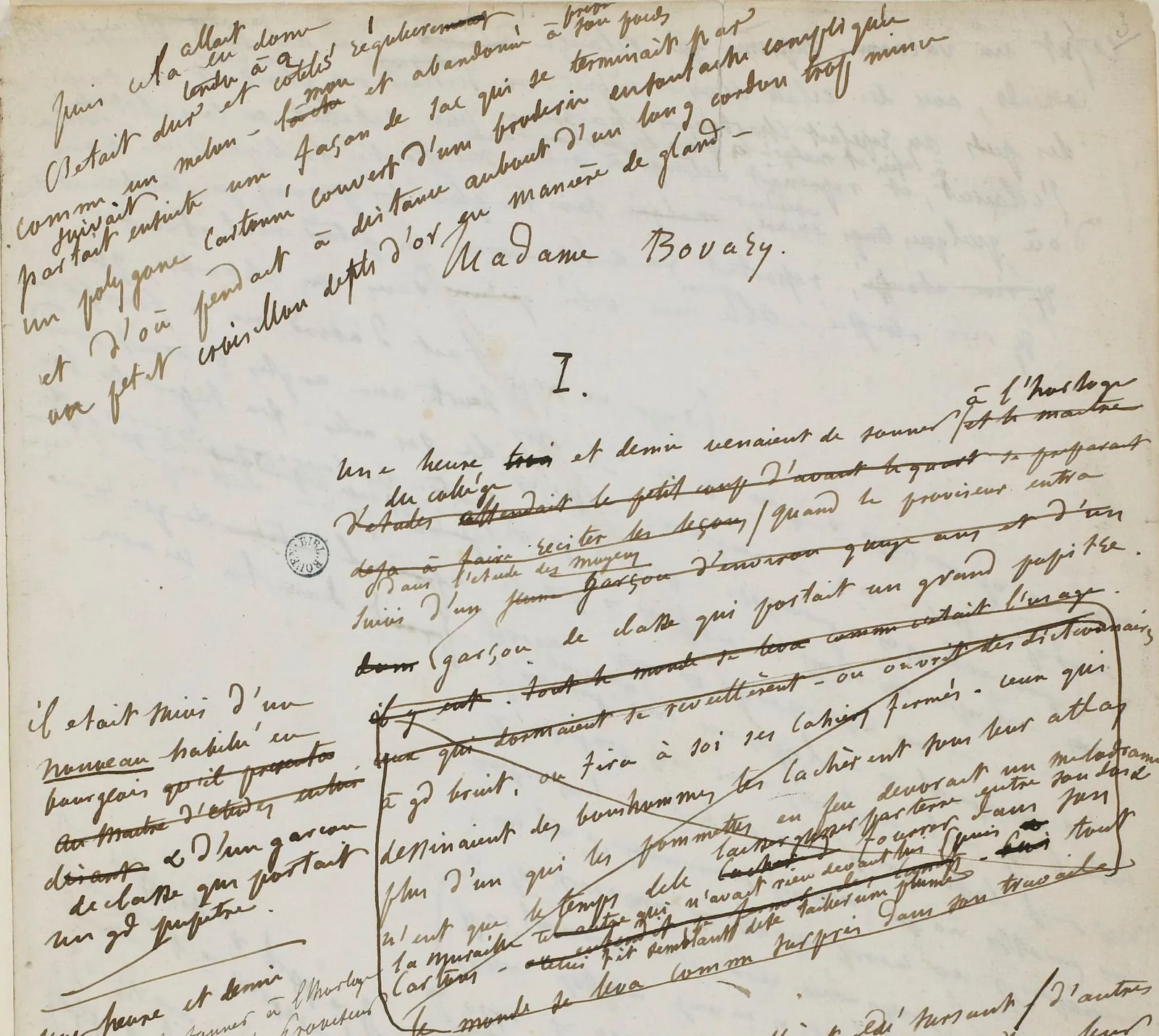
Great novels have been written from every point of view. Moby-Dick wouldn't be the same book without the "Call me Ishmael" that opens it, and Madame Bovary would lose a great deal if Flaubert didn't tell Emma's story so closely, with a "she" that lets her thoughts through. Knowing what each point of view allows, and what it rules out, mostly spares you from finding out after fifty thousand words.
Three questions behind the choice
Choosing a point of view comes down to answering three questions:
- Who knows what, and when? Does the narrator have access to the mind of one character, several, or all of them? Can they say what the character doesn't know yet?
- At what distance? Does the narrator stay so close to the character that we think along with them, or observe from afar, rebuilding their motives from their gestures?
- Can we believe them? Is their account reliable, or does the reader need to read it with suspicion?
These answers are chosen independently of the grammatical person. An "I" can be distant, like Proust's narrator when he tells of the child he once was, and a "she" can stick close to the character's skin, like Flaubert's inside Emma's head. The choice therefore concerns first the consciousness you put in the foreground, and the grammar follows.
First person: a voice, and its limits
When Melville opens Moby-Dick (1851) with "Call me Ishmael," he sets up in three words a casual, slightly insolent voice and a direct relationship with the reader, whom this narrator addresses.
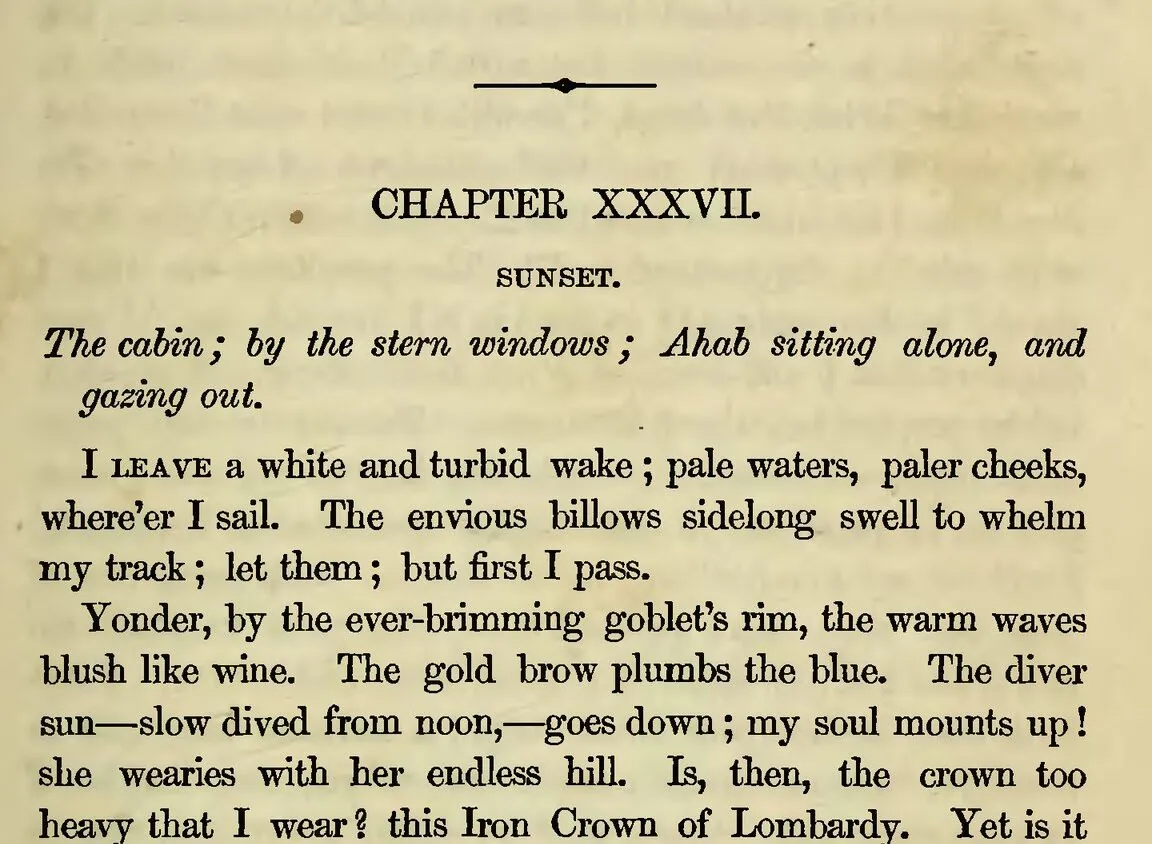
First person also limits what the story can know, and Melville himself breaks free of it when the story demands: in chapter 37, Ahab speaks alone in his cabin, and Ishmael isn't there to hear him. The reader accepts it because the book established very early a voice free enough to allow it, whereas in most novels a liberty of this kind stands out.
This point of view serves four things particularly well.
Immediate intimacy. The reader is inside the narrator's head from the first sentence, without having to be led there. That's why first person turns up so often in coming-of-age stories, like Holden's in The Catcher in the Rye, and in confessions, like Humbert's in Lolita.
A voice that stands out. In third person, the style can stay neutral; in first person, every sentence is signed by the narrator, and their quirks and silences tell you about them. In Lolita, Humbert's ornate prose is itself a clue to what he's trying to make us forget.
The unreliable narrator. When an omniscient narrator writes "she was sad," we believe it, whereas a narrator who writes "I acted in her best interest" can arouse doubt. Kazuo Ishiguro builds all of The Remains of the Day on this, as the butler Stevens tells his life while skirting what hurts him, so the reader gradually understands what Stevens refuses to see. The effect requires precise construction, because the reader must be able to rebuild the truth behind the account.
The witness narrator. In The Great Gatsby (1925), Fitzgerald hands the story to Nick Carraway, a neighbor who observes more than he acts. The reader never sees Gatsby from the inside, so the character keeps his mystery to the end.
This choice has a cost. The narrator struggles to describe themselves without artifice, hence the famous mirror scene. They can only tell what they saw or what they were told, so a decisive event happening in another room requires a device. And if their voice grows tiresome after a hundred pages, the whole book suffers.
Close third person: intimacy without the "I"
This is one of the most common points of view in fiction today. The story follows one character at a time, from the inside, with the grammar of "he" or "she," which keeps the intimacy while leaving more freedom to describe.
Its main tool is free indirect style: the narrator's sentence lets the character's thoughts through without announcing them with a "she thought that." Jane Austen uses it constantly in Emma (1815), and Flaubert pushes it very far in Madame Bovary (1857).
She looked at the clock. Another hour before dinner. How could she stand it?
The last two sentences are the character's thoughts, and yet the text stays in the third person.
You get the psychological depth of first person with the descriptive flexibility of third. Flaubert moves from Emma's daydreams to a description of Yonville written like a travel guide, at the start of the second part, without changing pronoun.
Close third person also suits novels with several points of view, where each chapter follows one character, as in George R. R. Martin's A Song of Ice and Fire. The rule that avoids confusion fits in one line: one point of view per scene, and you only change heads when you change scene or chapter.
Omniscient third person: the big picture
The omniscient narrator knows everything. They move from one character to another, comment on the action, sum up years in a sentence and address the reader whenever they like, like Balzac at the start of Père Goriot, calling out to the reader who holds the book "in a white hand." Tolstoy in War and Peace and Hugo in Les Misérables draw from it an authority you feel from the first pages.
Its advantage is scope. To tell a historical fresco or a family over three generations, omniscience is often the simplest solution, and it allows the irony and digressions of a narrator judging from above, as in Candide.
Its risk is coldness: by seeing everything, the narrator no longer stays close to anyone, and a reader used to identifying with characters may drift away. It also requires a consistent narrative voice, because this narrator has a personality even though they aren't a character, and you recognize it by its tone as much as by what it chooses to comment on.
Omniscience differs from head-hopping, which means switching from one consciousness to another in the middle of a scene without having decided to. Omniscience owns its overview, while head-hopping is an accident that disorients the reader. If you don't know which of the two you're doing, it's probably the second.
How to choose
How much distance do you want between the reader and your protagonist? If the reader should be inside their head and hear their voice, first person and close third work. If the reader should observe them, even judge them, a more distant third person or omniscience works better.
How many stories unfold in parallel? A single consciousness follows a single path, which suits an intimate novel or a closed-room story. Several paths call for multiple points of view in close third person, one per chapter, or for omniscience. Multiple first person exists too, since Faulkner alternates fifteen narrators in As I Lay Dying (1930), but it's a difficult exercise, and our article on the ensemble novel details its pitfalls.
Does the book rest on what the narrator hides? If the stakes lie in what they keep quiet or distort, first person is almost always the answer. Third person can also mislead the reader, but that's rarer and harder to build.
That leaves a more personal criterion, the voice you already hear. If your first pages come naturally in "I," forcing "he" or "she" may cost you more than it gains, and if you can't hear your character say "I," your instinct is probably telling you something.
Testing before you write the whole book
The classic trap is to write fifty thousand words, realize you picked the wrong point of view and balk at rewriting. You can find out much earlier by writing the same scene twice, once in "I" and once in "he" or "she." Take a key scene, with a real emotional stake rather than a transition: one of the two versions will quickly feel more alive, and that's the one you'll keep coming back to.
The exercise in brief: one key scene, two versions, one in "I," the other in "he" or "she," and you keep the one you want to reread.
In Extypis, you can save a version of the scene before rewriting it from the other point of view, then compare the two versions and go back to the first if you prefer it. The free plan allows two save points, which is enough for this kind of test.


The most common mistakes
The narrator in front of the mirror. It's the most worn-out way to have a first-person narrator describe themselves. It's better to let other characters describe them in passing ("you've lost weight again," "with that Boston accent of yours") or slip a detail into an action, like a botched hair dye, than to draw a complete portrait.
Head-hopping. Two consciousnesses alternate within the same scene: "She watched him, hoping he'd understand. He understood perfectly, but let nothing show." Outside a deliberate omniscience, it's a point-of-view error, and the fix is to stay in one head until the end of the scene.
The narrator who knows too much. In close third person, the narrator only knows what the character knows, and a sentence like "Without realizing it, he noticed that…" breaks the focus. The character's ignorance is precisely what creates tension, and it's better to preserve it.
The retrospective narrator who spoils the suspense. A narrator telling the story in the past knows how it ends. If they announce it too often ("I didn't know yet that it would be the last time"), the reader has nothing left to discover. Proust, Ishiguro, or Conrad in Heart of Darkness, dose these hints carefully.
Holding the point of view to the end
Once you've chosen your point of view, most of the work consists in respecting it, and it's often on rereading that you spot the scenes where it slipped. Ask each scene a single question: whose head are we in? If the answer changes mid-scene without your having decided it, that's where to rework.
Hubert Giorgi
Author
The writing studio novelists were missing
Outline, characters, places and objects, the links between them, mind map, scene board, export: everything lives in one place. Plus an AI that knows your story, whenever you want one.
Free to write and to export. No credit card asked.